What Happens During the First Month of College?
A Week-by-Week Guide for Parents (2026)
Move-in day is over.
The dorm room is set up.
The hugs have been exchanged.
The family SUV is pointed back toward home.
And suddenly you’re sitting in a Chick-fil-A parking lot wondering:
“Now what?”
If you’re the parent of a college freshman, the first month can feel like an emotional roller coaster. One minute your student is sending pictures from a football game. The next, you’re wondering why they haven’t responded to a text in three days.
The good news?
What you’re experiencing is completely normal.
While every student is different, most freshmen follow a surprisingly similar adjustment pattern during their first month of college.
Here’s what parents can typically expect.
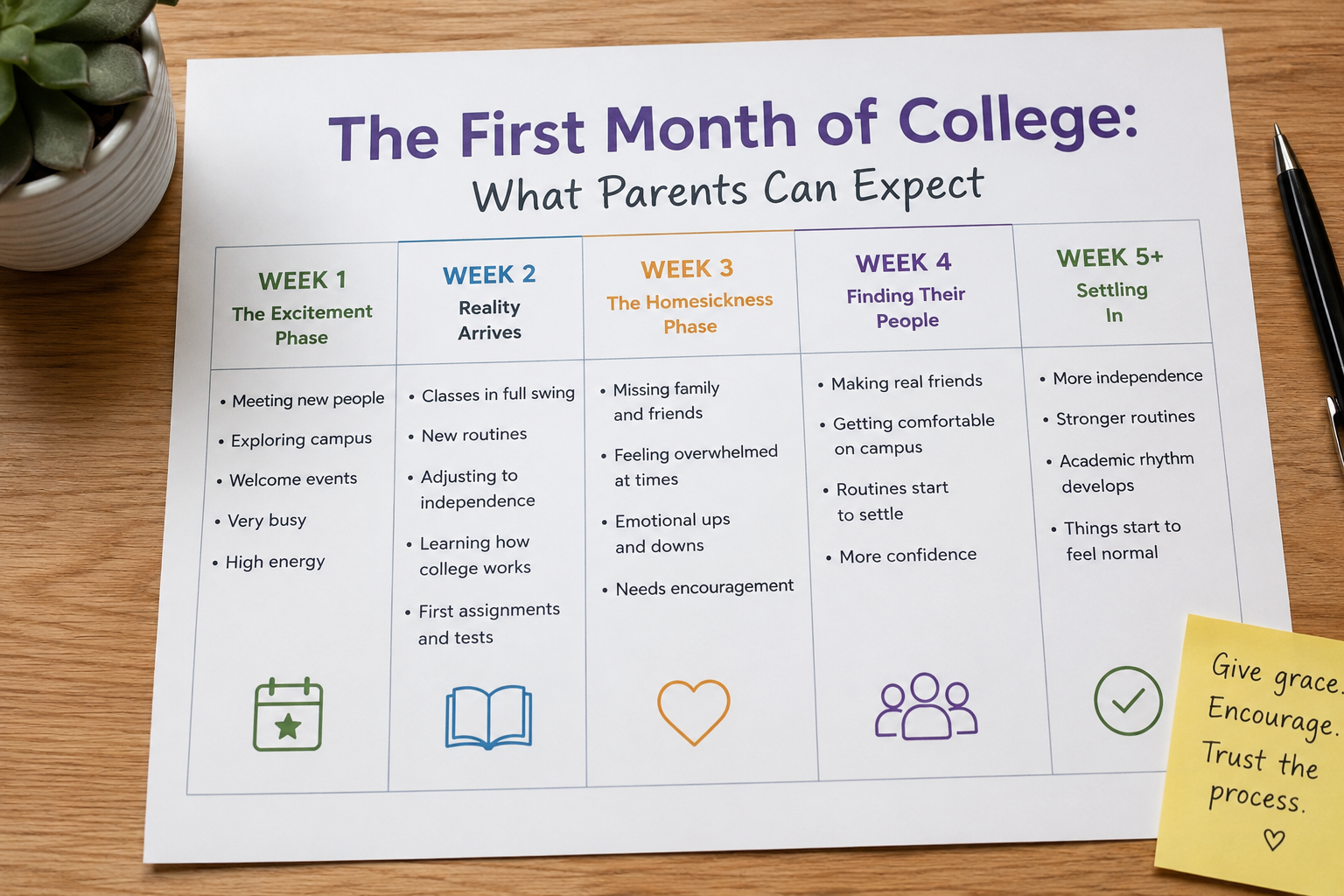
Week 1: The Excitement Phase
The first week often feels like summer camp with more freedom and less supervision.
Students are:
- Meeting roommates
- Exploring campus
- Attending welcome events
- Joining clubs
- Eating way too much dining hall food
- Taking hundreds of photos
Many freshmen barely have time to think about home.
Parents sometimes panic during this stage because communication suddenly drops.
Your student isn’t ignoring you.
They’re simply busy experiencing one of the biggest transitions of their lives.
Ultimate College Dorm Checklist
What Parents Should Do
Give them space.
Avoid texting every few hours asking for updates.
Trust that if there’s a major problem, you’ll hear about it.
Week 2: Reality Arrives
By the second week, classes begin.
The excitement starts wearing off.
Students discover:
- Professors don’t remind them about assignments.
- Laundry doesn’t magically do itself.
- Staying up until 2 AM before an 8 AM class is a terrible strategy.
This is when college starts feeling real.
For many freshmen, this is the first taste of true independence.
Signs This Week Is Going Well
- They’re learning campus routines.
- They’re attending classes.
- They’re finding favorite study spots.
- They’re making casual friendships.
What Parents Should Do
Listen more than you talk.
Many students aren’t looking for solutions.
They’re simply processing change.
Week 3: The Homesickness Phase
This is the week that surprises many families.
Students often seem perfectly happy during the first two weeks.
Then homesickness sneaks in.
It might look like:
- Missing family dinners
- Missing pets
- Missing childhood friends
- Feeling lonely despite being surrounded by people
For parents, this can be difficult to watch.
The instinct is to rescue.
Usually, that’s not the answer.
Homesickness is often part of the adjustment process.
It’s uncomfortable, but it’s also normal.
What Parents Should Do
Encourage them.
Remind them that almost every freshman experiences moments like this.
Avoid offering to bring them home after one rough weekend.
10 Audiobooks Every Incoming College Student (and Their Parents) Should Listen To
Week 4: Finding Their People
Around the fourth week, many students start settling in.
They’ve:
- Found friends
- Learned campus shortcuts
- Established routines
- Figured out where to study
- Identified favorite dining hall meals
This is often when parents notice communication becomes more natural again.
Not because students suddenly have more free time.
Because college no longer feels overwhelming.
What Parents Should Expect
The daily texts may never return.
And that’s okay.
A student becoming more independent is actually a sign things are working.
The Most Common Parent Worries
“My Student Isn’t Calling Home”
Normal.
Many freshmen are focused on building a new life.
A lack of daily communication usually isn’t a sign of trouble.
“They’re Eating Terribly”
Also normal.
At least temporarily.
Many students eventually discover that pizza and energy drinks aren’t a sustainable food group.
“They Seem Stressed”
College is stressful.
Learning how to manage that stress is part of the growth process.
“They’re Having Roommate Problems”
Most roommate conflicts are minor.
Learning to navigate differences is one of the most valuable skills students gain during college.
When Your Roommate Is Driving You Crazy: What to Do Before You Move Out
When Parents Should Be Concerned
Most freshman struggles are normal.
However, you should pay closer attention if your student:
- Stops attending classes
- Withdraws completely from friends
- Shows signs of severe depression
- Talks about leaving school immediately
- Experiences significant mental health challenges
If concerns become serious, encourage them to use campus resources.
Most colleges offer counseling, academic support, and student success programs.
What We Learned as College Parents
When our daughter started college, we expected constant communication.
The reality was different.
Some days we heard a lot.
Some days we heard very little.
Over time, we realized that fewer updates often meant she was doing exactly what she was supposed to be doing: building her own life.
That doesn’t make the transition easy.
But it does make it worthwhile.
Two Months In: What Dorm Students Actually Use
Final Thoughts
The first month of college is an adjustment period for everyone.
Students are learning how to be independent.
Parents are learning how to let them.
Both sides make mistakes.
Both sides worry.
And both sides eventually find a new normal.
If your freshman seems excited one day, homesick the next, and completely exhausted by Friday, don’t panic.
They’re probably having a pretty typical college experience.
And so are you.